Seven year cycles – the middle years

Lately, I’ve been thinking about the number seven, and seven year cycles. It makes for an interesting view on the cycles in life.

If we think that every seven years the cells of our body are replaced, right down to the brain cells and our skeleton, the tiniest little blood vessels, nerves and molecules. We are, in a sense, a completely different person, or at least a renewed person. We have a continuity with the person-who-was, and we are always the person-who-is, and yet we all have uncertain futures. It is a dream, a wish, a story if you will, that has not yet been written. I am taking some delight in this; the thought of being fictional is resonating in a good way with the person-who-is today. It leads me to start thinking about what the cycles might mean, in terms of who I am becoming. The Greeks would call ‘that which is becoming’ entelekia. We could latinize that to ‘Entelechy’. It was the name we used for a household I lived in for my first seven years in the United States; the residents of that household thought about the meaning of ‘entelechy’ as a kind of thought experiment. Some twenty years later, I am returning to those thoughts.

thOR4512PGWhile by no means a prescriptive narrative, in my meditation:

The first cycle of seven years in our lives is about growth. The first cycle is becoming an individual, learning skills, all in a very accelerated way. We are protean, plastic, and ultimately, form into unique persons with our own definite ideas about the world. The first seven years is about growth.

The second seven years is about physical maturation, starting to grow and gain strength and flexibility of body and spirit. It’s a great time to learn dance, martial arts and physical disciplines, if you have the ability to push your body that way. For those with more limited mobility or coordination, it is a time to find what is most comfortable for your body shape. Well, that’s true of everyone, to be sure. We are all differently abled in some respects. I found swimming and the discipline of gymnastics to be interesting, while my brother ran around a lot playing soccer, and my sister seemed to like to climb trees, roofs and such.

In the third cycle, from 14-21, this is when we push against boundaries around us and define what kind of person we will be, make choices about education, and find out what things we believe.

From 21-28, we try on and discard all kinds of memes, working to discover who we will be as adults. We experiment, sometimes we date many different people, and experience a wild assortment of lifestyles, fashions and belief systems.

By the time we’re 28, the framework of the person is in place, and from here on, we’re filling in what kind of virtual rooms we want, and how we want to decorate them. Somewhere between 21 and 28, give or take a few years, we may find a partner or two, decide if we want kids of our own, and make career choices. Around 28, if you’re a fan of astrology, this is when you have your Saturn Return, when the natal position of the planet Saturn comes full cycle, returning to where it was when you were born. In astrology, cycles of the planets are held to be important inflection points, where there is an energy for transformation of one kind or another. One of the outcomes of this cycle is throwing out stuff other people put in our heads. And then what? More of the same, or something different?

From 28-35 the young person might explore careers, relationships, hobbies and choices of exercise. They often jump paths, some choosing family responsibilities, and some just starting families, while others decide to pursue more personal challenges and education. Some folks change their patterns, jump across the world, travel, try extreme sports, develop a business and so on. During this time, we’re all about making our mark on the world. Being counted. Having an impact. Raising kids, or raising mischief, depending on our natures.

And then there’s the 35-42 cycle, where we start thinking about long-term planning, buying a house (if we haven’t already), building wealth, getting out of debt, making time for personal projects. Maybe another career change, dusting off the resume, dropping things from 15 years ago and generally doing some personal grooming and style changes. If we care, we moisturize.  This is the last hurrah if we change our mind about having children, unless we choose to adopt or join up with someone who has a ready-made family. We see friends around us making choices to be “middle-aged”, and see some of their choices deliberately narrowing. Health issues can start to become a factor in decisions. And we make choices ourselves about whether to keep expanding, and exploring, or if we want to be more settled ourselves. And then, after this, we run out of role models in the western world.

Unless we think about rock stars and celebrities, or very wealthy folks, our models for healthy, enriched lives start to look a bit, well, thin. We need to start looking further afield for role models and inspiration. There are much more complex societies and kinship models than the sparse nuclear family that came out of the industrial revolution. Deliberate or related families, people choosing co-housing, communal living, and house-swaps, fostering young adults, trading and swapping skills around a group of friends are a few things to explore. While not for everyone, pooling resources for a holiday experience or living arrangement can help multi-generational families and friends stay connected.

So, where is the middle if we think in terms of cycles of 7?

  • Cycle 1- to 7 years
  • Cycle 2 – 7 to 14 years
  • Cycle 3 – 14-21 years
  • Cycle 4 – 21-28 years
  • Cycle 5 – 28-35 years
  • Cycle 6 – 35-42 years
  • Cycle 7 – 42-49 years
  • Cycle 8 – 49-56 years
  • Cycle 9 – 56-63 years
  • Cycle 10 – 63-70 years
  • Cycle 11 – 70-77 years
  • Cycle 12 – 77-84 years
  • Cycle 13 – 84 – 91 years
  • Cycle 14 – 91 – 98 years
  • Cycle 15 – 98 – 107 years

Given extended longevity, the middle years run from cycle 7 through cycle 10, the years in the middle. It’s fun to think about this as a range of time, rather than as a target number.

My grandmother passed last year at 98 years of age, or at the end of Cycle 14. That’s quite an inspiration. She had a long, engaged, active and productive life way after any of the mixed feelings I might have about having arrived at the middle portion of my life.

If I was a novel, these middle cycles would be when all the exciting stuff would happen. Novels have an inciting incident, the hero grows into understanding, challenges arrive and need to be dealt with during the climax or just past the middle, and the resolution occurs in the latter part of the story.

If I think of myself as a piece of fiction I am writing, there is a whole 28 year period to think about, to ponder, and to make up cool things and design creative stuff. This is a much more positive meditation than thinking about a decade at a time, with all the associated baggage that comes with society’s emphasis on being forever young. By thinking in cycles of seven, it’s a way to sidestep some of those assumptions. Sevens it is!

Next, I think I’ll focus on a list of stuff on my “to do” list that’s checked off already. That’ll give me some areas for new exploration.

Ria

Meditation and the month of May


Hawthorn, Washington

Hawthorn – the May

Here, as the May, or Hawthorn, has finished blooming it is one of the times in the year that I pause and think about where I am and who I am becoming.  While some think of May 1 as May Day, I prefer to wait until the Hawthorn acts as a signal to re-establish my center in relationship to the world around me. There is also a little meditation about approaching my birthday later in the year; May is the halfway mark to my birthday in November.

The passing of the May seems to coincide with spring cleaning, gardening, and all the renewal projects. It also signals that the time for outdoor fun is here, at least if the weather cooperates. Here’s hoping for a bright and renewing summer for my friends and family.

[Part of this article has been sent to another post, if you saw the original version that talked about Cycles of 7 years.]

Ria

Food: DIY protein snacks and bars

chocolatechipsHealthy snacks for people on the go

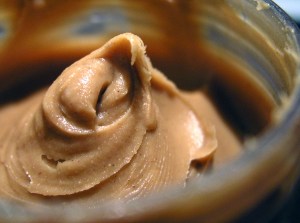
This lovely little oddity comes to us courtesy of a food co-op in Madison, Wisconsin some 30 years ago, along with the slogan, “Power to the Beeple”. My sweetie told me about these “beeple bars”, and with a little experimenting, we reinvented the recipe. It’s basically a nut and protein bar with protein powder, honey and lecithin to bind it together. There are endless variations on a theme, some with more or less sweetener. If you want to go with peanut butter, no-salt peanut butter is best, especially the grind-your-own from PCC, Whole Foods or your local co-op grocer.

Ingredients

  • Nut butter – peanut, almond, macadamia
  • Whey protein powder
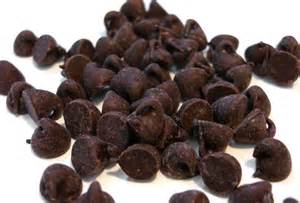
  • Cocoa powder, and maybe some chocolate chips
  • Binding agent – honey, lecithin (not sweet), molasses or agave syrup (lower sugar)
  • Optional – dried fruit, coconut flakes (unsweetened)

Making

  • Blend the  nut butter with honey and lecithin
  • Add WPI protein powder (chocolate flavored is good, or plain), and cocoa.

Use your hands to smooth it all together . It’s all kinds of messy and gooey, but by hand is the best way to mix all the ingredients. Keep mixing until it has the texture of a moist dough, all stuck together.

OLYMPUS DIGITAL CAMERA

Tips

  • If it’s too dry, add more lecithin
  • If it’s too moist, add more protein powder

Finishing touches

  • Take the ‘dough’, make a one inch ball, roll it in coconut and refrigerate.
  • Roll out a bar, add some raisons, wrap in wax paper or foil, keep in the refrigerator until ready to add to your day pack.

Variations

  • Add chocolate chips
  • For a desert treat, dip in chocolate
  • For some ‘snap’ add rice crispies
  • I particularly like blending a couple of nut butters together like peanut butter/almond butter or macadamia/pecan

These snacks are tasty and nutritious, and best of all, you know all the ingredients that went into them. 

7 Things I learned about book marketing

It’s no exaggeration to say that I started this year with only a little bit of a clue about book marketing. I’d attended a couple of podcasts last year and had read the amazing Joanna Penn. Those activities gave me some places to start.

  • Research the Amazon categories that are closest to the book project
  • Use keywords when setting up the book in amazon
  • Use a title and subtitle on the book cover

However, these starting places ended up being more tactical than strategic. I wasn’t looking at this from the top down. I was still looking at it from the ‘things to do’ rather than approaching marketing from a classical perspective.

When I attended the Smarter Artist Summit this year, my ideas got turned on their head. Michelle Spiva gave a great talk about how  to stop trying to trick your fans into following you. Her approach was to teach them to love you instead. Michelle had a couple of key things to share. Tactics are not marketing. Strategy, it turns out, is about having a goal for what you want to do. The classic push and pull marketing strategies can be leveraged to build an overall plan. Michelle demonstrated how using both push marketing (like targeted advertising) and pull marketing (like a newsletter) can work together.

The seven main things I learned from conferences this year about marketing:

  1. Figure out what your goal is
  2. Write your ‘I am’ statement. For me:
    I am a great kids author and illustrator
    I am an awesome designer and maker
  3. That ‘branding’ is who people think you are when you’re not around
  4. Organizing events into push and pull categories helps you strategize better
  5. Push is a pattern interrupt. It is repetitive, qualified, trusted
  6. Pull is warm traffic with no intermediary, like a sale
  7. Go to where your traffic is

Michele Spiva emphasized having a long term marketing plan in order to avoid churn and burn. There are three main areas to focus on. Those are Traffic, Conversion and Sales. Oddly enough, my dad would have said much the same things. Traffic is about getting attention, conversion is about giving the traffic something to do. For conversion and sales, as an author I’m looking for true fans. To find the traffic, you need to go where they are. You need to hang out and be a genuine member of the community. Authenticity cannot be faked; they need to be your tribe.

To get back to the seven things I learned, a few words about each of these.

  1. Figuring out what your goal is
    Do you want to be a great blogger, a popular author, a celebrated illustrator?
    Your particular goals will differ. Without a goal, it’s hard to pitch to people.
  2. Write your “I am” statement 
    It helps to figure out what you’d put on a sticky note. Something that happened at the Smarter Artist Summit this year was people asking “what’s your superpower?” That was a clarifying question. Try it out for yourself.
  3. Branding
    Who people think you are when you’re not around. Huh. That means all of your messages need to be consistent. You get to understand some of this when you read your book reviews. Branding is as much about opinions as it is about what you think you’re putting out there.
  4. Push and pull strategies
    I found this super helpful. It allows me to draw a couple columns and work out where the events are, and what the tactics are for each event. Brilliant.
  5. Push  – an event that is aimed at getting traffic
    Advertising can be incredibly targeted. Amazon ads, for example, target people who  have bought books like yours. The value of the ‘also bought’, those recommendations that are shown to people when they are browsing for a new book, cannot be underestimated. Other entries into a sales funnel are free things that can be managed through Instafreebie, Bookbub, or Goodreads. Competitions are good ways to get a mailing list in place. As that’s something I haven’t done yet, this was all a bit new. My takeaway was being picky about who you have on your list.
  6. Pull events are what you do with people who already opted in
    You need to give your mailing list a reason to open your newsletter. It arrives in the mailbox, which is grand. However, it needs to avoid being annoying or too frequent. Making it valuable will build true fans.
  7. Go where your traffic is
    If you’re on Goodreads, you can recommend books you like. That gets you known in the community. When you have something of your own to contribute, like a new book, then it’s not spammy to mention it. Hang out in the forums, join lists for things you are interested in, and make conversation. It’s good to be a welcome visitor in the room.

I am continuing to learn more about publishing and book marketing all the time. Attending workshops and podcasts with indie authors like Michelle Spiva gives me inspiration.

This year, my strategy is to start is building an overall marketing plan. Then I’ll work on the top of the funnel for one project area at a time. Thank you to everyone who shared their tips and tricks with me. I’ll keep telling you what I find out along the way.

Design for the right size screen

The monitors are larger,

so we can fit more on the screen

vectorstock_18712444One of the challenges of design is to have a response to the desire to fit more on the screen, as it seems obvious (to some) that a larger screen means more real estate to fill. Periodically, we also hear a proposal to have wider text, beyond the 75 characters that a person can read without turning their head. And that really depends on whether the device is at 10 feet, like a television or hand-held, like a smart phone.

However, the proportional relationship described by the distance between eyes, the reach of the arm, the amount a person can view without turning their head – those hold true, regardless of the size of the screen, console, device. For most practical purposes, designers use the width of 45-75 characters as the optimal width for reading. That’s actually why we have columns in magazines and newspapers. It makes it easier to read. We can cheat those numbers a bit, but beyond around 80 characters, we need to understand how we’re hurting readers.

As designers of human-computer interactions and experiences, we find ourselves drawing pictures to show people how that works. We draw the distance between human eyes, the viewing distance of the screen, at arm’s length away from the person, and the cone that represents the field of vision. We show a novel held in the hand, and examples from movies such as star wars, where there are a few large words across the screen, but those words fill the whole visual field

A long time ago

In a galaxy

Far far away

We show a person holding up their thumb, and moving it around at arm’s length. This simulates how we parse information, the thumb being the point of attention, and moving the thumb shows the bite-sized chunk of information we see at a time. The size of the monitors has changed, but the focus of human eyes has not. Human-machine interface follows the same rules as the other proportional relationships found in nature, and in the human body.

Fibonacci  described the relationships as part of the sequence of numbers and geometry found in the body, and in nature, as part of a spiral known as the divine proportion, or golden ratio. Though we more popularly know of Fibonacci from the Dan Brown novel, The DaVinci Code, his explorations of numbers in nature and the body are fascinating from a design perspective. They remind us that defining space, and designing within that space, can be made more pleasing by paying attention to the golden ratio. We can choose rectangular shapes that follow that ratio; we can also place information in places that the eye will naturally follow, along the curve of the spiral.

Changes in perception are occuring, however, not in ways we may have expected. More often than not, those large screens allow us to switch rapidly between different screens, rather than expanding just one. We can fit more windows on the screen, and move our attention between those windows, and the information contained in them. We also move perceptually between multiple email conversations, surfing, games, and writing, all in parallel. However, unless working on a full-game immersion, or a graphics program, maximizing a window is out. It makes it harder to mouse across to the far edges, adds to fatigue, and frankly too much is missed if it is on the periphery of our vision.

As a user experience designer, I need to be aware of these balance points, and not design experiences that make the user work too hard for the reward of the information they are trying to get to. Making it easier, quicker, more responsive within the frame or window, that’s the ticket.

Ultimately, we design for a variety of screens and devices. We use media queries to determine which stylesheets to use, and how the responsive widths will display the information. We have come a long way from the old world of print, with fixed layouts that are static. The end user wants control of their device, and of their experience. If we listen to that, and pay attention, we will design in a way that respects the person’s wish to change their screen contrast, the fonts, the sizes and the colors. Good design can take all these things into account, and become even more relevant to the person we are designing the experience for. That’s what modern design aims for – the right sized experience in the hands of people with all kinds of different needs.